
level of customization is possible with your Flexible circuit board
Flexible circuit boards, also known as flex PCBs, offer a remarkable level of customization, making them indispensable components in a wide range of industries. Unlike traditional rigid PCBs, flex PCBs provide unparalleled flexibility and adaptability, allowing engineers and designers to create innovative solutions for diverse applications. From intricate designs to unique form factors, the level of customization possible with flexible circuit boards is truly remarkable.
One of the primary advantages of flexible circuit boards is their ability to conform to complex shapes and contours. This flexibility enables designers to create products with unconventional form factors that would be impossible to achieve with rigid PCBs. Whether it’s a wearable device, a curved display, or a compact electronic module, flexible circuit board can be tailored to fit the specific requirements of virtually any application.
In addition to their physical flexibility, flexible circuit boards offer extensive customization options in terms of circuit layout and design. Engineers have the freedom to design intricate circuitry with precise routing and spacing, optimizing performance and minimizing signal interference. This level of customization allows for the integration of advanced features such as high-speed data transmission, impedance matching, and power distribution, meeting the demands of even the most complex electronic systems.
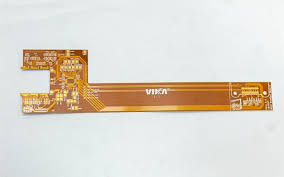
What level of customization is possible with your Flexible circuit board?
Furthermore, flex PCBs can be customized to meet stringent environmental and performance requirements. With the right choice of materials and manufacturing processes, flexible circuit boards can withstand extreme temperatures, moisture, vibration, and other environmental factors. This level of customization is particularly valuable in industries such as aerospace, automotive, and medical devices, where reliability and durability are paramount.
Another aspect of customization lies in the choice of substrate materials and surface finishes. Flex PCBs can be fabricated using a variety of materials, including polyimide, polyester, and PTFE (polytetrafluoroethylene), each offering different properties in terms of flexibility, thermal stability, and dielectric strength. Similarly, surface finishes such as ENIG (Electroless Nickel Immersion Gold), HASL (Hot Air Solder Leveling), and OSP (Organic Solderability Preservatives) can be selected based on specific performance requirements and compatibility with assembly processes.
Moreover, flexible circuit boards can be customized with a wide range of additional features and functionalities. This includes the integration of components such as sensors, antennas, connectors, and embedded passive devices directly onto the flexible substrate. By integrating these components into the PCB design, engineers can reduce assembly time, minimize footprint, and enhance overall system performance.
Furthermore, advancements in manufacturing technologies, such as additive manufacturing (3D printing) and laser processing, have further expanded the possibilities for customization with flexible circuit boards. These technologies enable rapid prototyping and low-volume production of highly complex designs, allowing for iterative design iterations and faster time-to-market.
In conclusion, the level of customization possible with flexible circuit boards is virtually limitless, offering engineers and designers unparalleled freedom to innovate and create groundbreaking electronic products. From unique form factors to intricate circuit designs, flex PCBs empower manufacturers to meet the diverse needs of modern applications across various industries. As technology continues to evolve, the customization potential of flexible circuit boards will only continue to grow, driving further innovation and advancement in the field of electronics.


