
How Does a Flex PCB Manufacturer Ensure Uniform Quality?
Ensuring uniform quality is a critical aspect of flex PCB manufacturing, as it directly impacts the performance, durability, and reliability of the final product. Flexible printed circuit boards (PCBs) are used in a wide range of industries, including consumer electronics, automotive, medical devices, and wearables, where they must meet stringent standards for both functionality and longevity. A flex PCB manufacturer employs various strategies, technologies, and quality control processes to maintain consistency and ensure that every unit meets the required specifications. In this article, we will explore how a flex PCB manufacturer ensures uniform quality throughout the production process.
1. Precision in Design and Engineering
The foundation for achieving uniform quality begins with the design and engineering phase. A flex PCB manufacturer works closely with customers during the design process to ensure that the design specifications are feasible and optimized for production. Using advanced Computer-Aided Design (CAD) tools, manufacturers can create precise layouts, trace patterns, and layer configurations that meet the necessary performance criteria. Design for manufacturability (DFM) checks are integrated to avoid potential issues such as trace width problems, incorrect hole sizes, or misalignment during the manufacturing process.
By addressing design challenges early on, a flex pcb manufacturer helps prevent defects that could arise later in production, contributing to consistent quality across all units.
2. High-Quality Materials
The choice of materials plays a crucial role in the quality of the finished flex PCB. A flex PCB manufacturer carefully selects high-quality materials for both the flexible substrate and the copper layers. Common materials used in flex PCBs include polyimide films for flexibility and thermal resistance, copper foils for conductivity, and adhesives for bonding layers.
The consistency of these materials is essential to ensuring uniform performance across batches. To maintain uniformity, manufacturers source materials from reputable suppliers and conduct quality checks on incoming raw materials. This ensures that the materials meet the required standards for strength, flexibility, and electrical performance before being used in production.
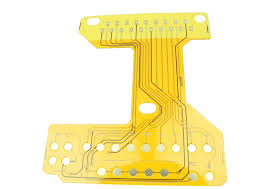
3. Advanced Manufacturing Techniques
A flex PCB manufacturer uses advanced manufacturing techniques to produce high-precision flex PCBs. Techniques like laser etching, automated drilling, and automated optical inspection (AOI) ensure that each PCB is produced with high accuracy and consistency. Laser etching, for example, allows for the precise removal of copper traces without affecting the surrounding material, while AOI systems detect defects such as misaligned components, broken traces, or incorrect hole placements.
These techniques allow for the precise replication of designs across multiple units, which is crucial for achieving uniform quality in mass production.
4. Strict Process Control and Monitoring
Maintaining uniform quality throughout the production process requires strict process control and monitoring. A flex PCB manufacturer implements detailed standard operating procedures (SOPs) at each stage of the production process, from material handling to final inspection. Temperature, humidity, and pressure are carefully controlled in environments like laminating and curing to ensure consistent results.
During the fabrication process, real-time monitoring systems track key parameters like etching depth, copper plating thickness, and adhesive curing times. These systems alert operators if any of these variables deviate from predefined limits, allowing for immediate corrections to avoid defects.
5. Quality Control and Testing
One of the most important aspects of ensuring uniform quality in flex PCB manufacturing is rigorous testing. A flex PCB manufacturer performs a series of quality control tests at various stages of production to identify potential defects early. These tests include:
Electrical Testing: Each PCB undergoes electrical continuity testing to ensure that the copper traces are properly connected and there are no short circuits or open circuits.
Mechanical Testing: Flex PCBs must endure bending and flexing during their lifespan. To ensure mechanical durability, the manufacturer tests the flexibility and stress resistance of the PCBs, simulating real-world conditions.
Visual Inspection: Automated Optical Inspection (AOI) systems and manual inspections help detect issues such as component misplacement, soldering defects, or visible damage.
Thermal Testing: Testing for temperature resistance ensures that the flex PCB can function in varying temperature environments without degradation.
By conducting these tests throughout the manufacturing process, a flex PCB manufacturer ensures that every board meets the required quality standards before it moves to the next phase.
6. Feedback Loops and Continuous Improvement
Quality assurance in flex PCB manufacturing is an ongoing process. A flex PCB manufacturer establishes feedback loops, where any defects or inconsistencies discovered during testing are analyzed to identify the root cause. This information is used to improve the manufacturing process, whether it’s tweaking the design, refining materials, or adjusting the production methods.
Continuous improvement practices, such as Six Sigma or Lean manufacturing, are often employed to eliminate waste and reduce variability. By continually improving processes, the manufacturer can enhance overall quality, leading to more consistent products and fewer defects.
7. Final Inspection and Packaging
Before flex PCBs are shipped to customers, they undergo a final inspection to ensure uniformity and functionality. This inspection includes verifying that all customer specifications, such as layer counts, trace widths, and component placements, are met. Once the boards pass inspection, they are carefully packaged to prevent damage during transport.
A flex PCB manufacturer may also provide additional services, such as functional testing or prototyping, to ensure that the final product meets the customer’s performance requirements.
Conclusion
Ensuring uniform quality in flex PCB manufacturing involves a combination of precise design, advanced manufacturing techniques, strict process control, and rigorous testing. By focusing on these areas, a flex PCB manufacturer can deliver consistent, high-quality products that meet customer specifications and stand up to real-world challenges. The use of high-quality materials, thorough testing, and continuous process improvement ensures that every flex PCB produced is reliable and performs optimally in its intended application, whether it’s in consumer electronics, medical devices, or automotive systems.


