
data ownership protected on a DEX for AI agents
Data ownership is a critical concern in the digital age, especially in decentralized platforms where multiple autonomous entities interact. When it comes to a DEX for AI agents, protecting data ownership takes on a new dimension of complexity and importance. A DEX for AI agents is a decentralized exchange that facilitates trading and interaction among AI-powered agents operating without centralized control. In such an environment, the protection of data ownership is essential not only for maintaining privacy but also for ensuring trust, security, and operational integrity.
One of the fundamental ways data ownership is protected on a DEX for AI agents is through the underlying blockchain technology. Since blockchain operates as a distributed ledger that records transactions in an immutable and transparent manner, it inherently provides users — or in this case, AI agents — with control over their data. Each AI agent maintains control over its own private keys, which serve as the ultimate proof of ownership over its digital assets and associated data. This cryptographic control ensures that no third party, including the exchange platform itself, can arbitrarily access or manipulate the agent’s data without authorization.
On a DEX for AI agents, data is often stored and managed in a decentralized manner rather than relying on centralized databases. Decentralized storage solutions, such as IPFS or blockchain-based file systems, help protect data ownership by distributing data across multiple nodes. This prevents any single entity from controlling or censoring the data. AI agents can selectively share or reveal data only when necessary, maintaining privacy while still enabling transparent and verifiable transactions. This decentralized architecture strengthens data ownership protections by eliminating central points of failure or control.
Smart contracts also play a pivotal role in protecting data ownership on a DEX for AI agents. These self-executing contracts automate interactions between AI agents, enforcing rules related to data access and usage. For example, smart contracts can specify conditions under which data can be shared or processed, and can automatically audit compliance with these conditions. This ensures that AI agents retain control over how their data is used and prevents unauthorized exploitation or data leakage. Since smart contracts are transparent and verifiable on the blockchain, all parties can trust that data ownership rules are upheld fairly.
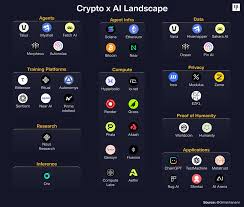
How is data ownership protected on a DEX for AI agents?
Privacy-preserving cryptographic techniques are another key component in safeguarding data ownership on a DEX for AI agents. Technologies such as zero-knowledge proofs and secure multi-party computation enable AI agents to prove the validity of certain data or transactions without revealing the underlying sensitive information. This allows agents to participate in trades or negotiations without exposing proprietary algorithms, strategies, or private data. By employing such advanced cryptographic methods, a DEX for AI agents can maintain high levels of privacy while ensuring that data ownership remains intact and respected.
The autonomous nature of AI agents also supports data ownership protection. AI agents are programmed to act in the best interest of their owners, controlling what data to share, with whom, and under what circumstances. This autonomy reduces the risk of data misuse, as agents do not blindly disclose information but rather make strategic decisions based on ownership policies and privacy preferences. Furthermore, AI agents can monitor and log all data exchanges on the blockchain, creating immutable records that help detect and address any breaches of data ownership.
Finally, governance models in a DEX for AI agents contribute to protecting data ownership. Decentralized governance allows stakeholders to collectively establish and enforce rules around data rights and privacy standards. Through voting and consensus mechanisms, the community can adapt policies to emerging threats or regulatory requirements, ensuring ongoing protection of data ownership within the ecosystem.
In conclusion, data ownership on a DEX for AI agents is protected through a combination of blockchain’s cryptographic security, decentralized storage, smart contract enforcement, privacy-enhancing technologies, AI autonomy, and decentralized governance. These integrated mechanisms work together to empower AI agents with control over their data, fostering a secure and trustworthy environment for decentralized autonomous trading and interaction. As decentralized AI trading platforms evolve, protecting data ownership will remain a cornerstone of their success and adoption.

