
Flexible Printed Circuit Manufacturers Ensure Product Accuracy
The fabrication process for flexible printed circuit boards is a vital step in the design and creation of electronic devices. These are used in a variety of applications and have to be durable, resilient, and reliable. This is why you must always look for a reputable flexible printed circuit manufacturer to work with on your projects. When selecting a company, ask to see some of their previous projects and look for consistency with the final product. The company should also be able to tailor its PCBs based on your specific needs, and not have a one-size-fits-all approach to its designs.
The manufacturing process for a flexible printed circuit manufacturers is more involved than rigid-boards because the copper layers need to be placed and etched in a way that is accommodating to its flexibility. This includes using small holes and a PCB architecture that is well-inclined to flexibility. Creating bend-relief holes and tangent curves in the inside corners can help with this, as can etching a copper layer that is less than half of the thickness of the overall material layer.
A common method for etching copper on a flex PCB is through the use of screen printing. This is a process that uses silver-based inks to deposit the desired copper traces on the insulating base film. However, this technique is limited in its ability to support many layers of complex layouts.
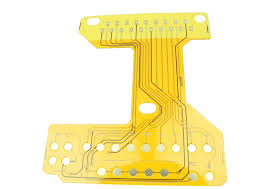
How Flexible Printed Circuit Manufacturers Ensure Product Accuracy
It is also more prone to problems with contact points than other methods, such as chemical etching. The etching process requires the use of sacrificial material to protect components from damage and shield the copper traces from etchants, which are typically sulfuric acid solutions. The etching process reduces the line width of the copper by up to 50% and can be affected by different types of conductor, the etch mask, and the plating processes.
Rigid and flex-rigid combinations often utilize stiffeners (polyimide or FR4) to stiffen certain non-flexing regions. This is necessary to keep the flex section from collapsing during assembly or during a lot of bending and flexing. It can also be helpful to stiffen the flex end points, particularly where they terminate to a connector or to a rigid area of the board.
The next step in the process is lamination. The insulating film, the copper foil, and the photomask are laminated together in order to create a complete flex PCB. Lamination can be done sheet-by-sheet, or it can be performed on a continuous basis. The flex PCBs are then cut to their final sizes. This is a critical step that ensures that the PCBs are the correct length and have the proper connections for their intended end-use products. Before the flex PCBs are shipped, the manufacturer performs a number of electrical tests on them to ensure that they are working properly. This is done based on a visual examination and an inspection of the circuit board components, including the contacts. This will reveal any defects, such as solder splash or shorts.


